

Our experienced physiotherapists combine hands-on treatment, tailored exercise programs, and posture correction to relieve pain, restore mobility, and prevent flare-ups.
✔ Immediate Pain Relief
✔ Restored Mobility & Strength
✔ Long-Term Results Backed by 25+ Years’ Experience
Facet joint pain can disrupt your daily life, making even simple movements a challenge.
Physiotherapy for facet joint pain offers a targeted, non-invasive approach to alleviate discomfort and improve your spinal health.
At The Alignment Studio, our experienced physiotherapists in Melbourne CBD specialise in diagnosing and treating spinal conditions like lumbar facet joint pain and cervical facet syndrome.
By combining hands-on treatment, targeted exercise programs, and posture correction, we don’t just manage symptoms — we address the root cause to help you move freely again.
Whether you’re dealing with lumbar facet joint pain or cervical facet syndrome, our holistic approach ensures comprehensive support for pain relief and long-term recovery.
Facet joints are the small joints that connect each vertebra in your spine, allowing you to bend, twist, and move smoothly.
When these joints become irritated, stiff, or worn down, they can cause localised pain, stiffness, and reduced mobility in the neck, upper back, or lower back.
Conditions such as lumbar facet joint pain or cervical facet syndrome often develop from natural wear and tear, injuries, or poor posture.
Left untreated, facet joint problems can make everyday movements — like sitting, standing, or turning your head — painful and difficult.
Facet joint pain can affect the neck, upper back, or lower back, and symptoms often vary depending on the area of the spine. The most common signs include:
These symptoms can be aggravated by facet joint degeneration, arthritis, injuries, or poor posture. Early treatment with physiotherapy can help relieve pain, restore mobility, and prevent flare-ups from becoming long-term issues.

Facet joint pain often develops when the small joints in your spine become irritated, stiff, or worn down. This can result from:
While anyone can experience facet joint pain, it’s especially common in adults over 40, office workers, and people with physically demanding jobs.
Physiotherapy treatments for facet joint pain focus on relieving pain, improving joint mobility, and addressing the underlying cause of the condition.
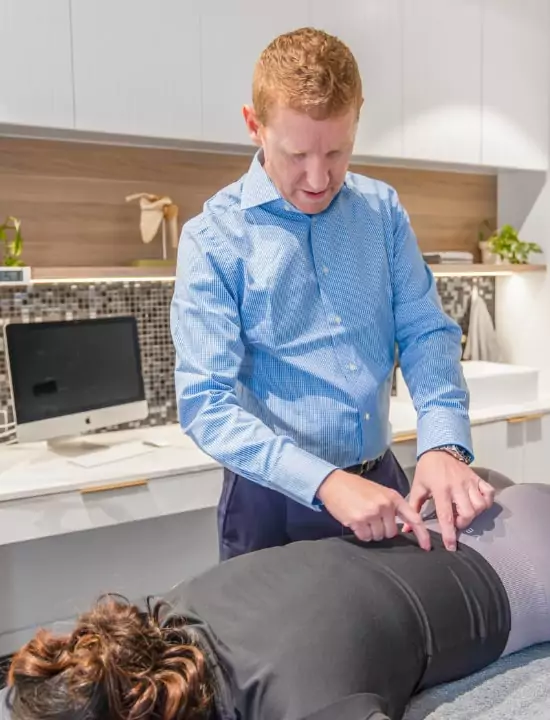
One of the most effective treatment options is manual therapy, which includes techniques like joint mobilisation.
These hands-on approaches aim to reduce stiffness and restore normal movement patterns in the facet joints of the spine. By targeting specific areas, manual therapy helps to alleviate tight muscles and improve overall spinal function.
Exercise therapy plays an equally important role in managing facet joint pain. This typically involves a combination of stretching exercises and strengthening exercises tailored to the individual’s needs.
Stretching exercises can help release tension in tight muscles, while strengthening exercises focus on building muscle strength in the core and surrounding areas.
Strengthening the abdominal muscles and supporting structures of the spine can reduce the strain on the affected area, preventing further damage.
Pain management is another critical component of physiotherapy.
This includes patient education to help individuals understand their condition and learn how to manage pain levels effectively.
Techniques such as posture correction are often incorporated to address issues related to poor posture, which is a common contributing factor to facet joint pain.
Improving posture reduces stress on the joints and promotes better spinal alignment, aiding in long-term recovery.
In addition to traditional physiotherapy treatments, several complementary approaches can enhance the effectiveness of care for facet joint pain.
Conservative management strategies, such as lifestyle modifications, are often recommended to reduce pain and prevent flare-ups.
For instance, avoiding heavy lifting, maintaining proper posture, and engaging in regular exercise programs can significantly lower the risk of aggravating the condition.
When physiotherapy alone does not provide sufficient relief, medical interventions may be considered.
Facet joint injections, which involve the use of a local anesthetic, can provide short-term pain relief by numbing the affected joint. In some cases, radiofrequency ablation may be used to disrupt pain signals by targeting the nerves around the facet joint.
These procedures are minimally invasive and can offer significant relief for individuals with chronic pain.
Addressing blood flow to the affected area is another essential aspect of treatment. Improved circulation can help reduce inflammation and promote healing in the joint capsule and surrounding tissues.
For individuals experiencing muscle spasms, muscle relaxants may be prescribed as part of a comprehensive pain management plan. These medications work by easing tension in tight muscles, making it easier to perform physiotherapy exercises and daily activities.
By combining evidence-based physiotherapy techniques with complementary treatments, patients can achieve more effective treatment outcomes.
A tailored approach ensures that all aspects of the condition are addressed, from reducing pain signals to improving joint mobility and muscle strength.
Physiotherapy at The Alignment Studio in Melbourne helps you not only find fast relief but also regain long-term spinal health.

Manual therapy and joint mobilisation ease stiffness and reduce pain from facet joint degeneration, injury, or poor posture.

Targeted stretches and exercises restore flexibility and range of motion so you can bend, twist, and move freely again.

Strengthening surrounding muscles takes pressure off your facet joints, helping to prevent flare-ups and protect your spine.

Postural correction and movement retraining improve spinal alignment during daily activities, reducing stress on your joints.

A proactive approach reduces the risk of recurring pain and slows down degenerative changes, keeping you active and confident.

25+ years of expertise treating spinal pain, including lumbar facet joint pain and cervical facet syndrome.

175+ 5-star Google reviews from patients who trust us for pain relief, mobility, and lasting recovery.

Located in the heart of Melbourne’s CBD with same-day appointments available for busy professionals.

Physiotherapy combined with Clinical Pilates and remedial massage for a complete recovery approach.

State-of-the-art clinic on Collins Street designed for comfort, efficiency, and effective treatment.

Private health insurance rebates available to make quality care more accessible.
Don’t let facet joint pain hold you back from living life to the fullest. At The Alignment Studio, our experienced physiotherapists provide accurate diagnosis and tailored physiotherapy for facet joint pain to help you recover faster.
Book online or call us at (03) 9650 2220 to schedule your appointment today.
With our evidence-based physiotherapy treatments and holistic care approach, you can achieve lasting pain relief and improved spinal health. Take the first step towards a pain-free life by reaching out to our Melbourne CBD clinic—your path to recovery begins here.